Elasticity-Based Displacement Propagation
When you prescribe displacements on a subset of mesh vertices (e.g. a moving boundary, a deformable inclusion, an injection face) and need a smooth field on the rest of the mesh, mmgpy ships two propagators:
propagate_displacement— solves Laplace's equation on the mesh graph, no extra dependency.propagate_displacement_elasticity— solves a linear elasticity problem on the mesh via the optionalfedoobackend.
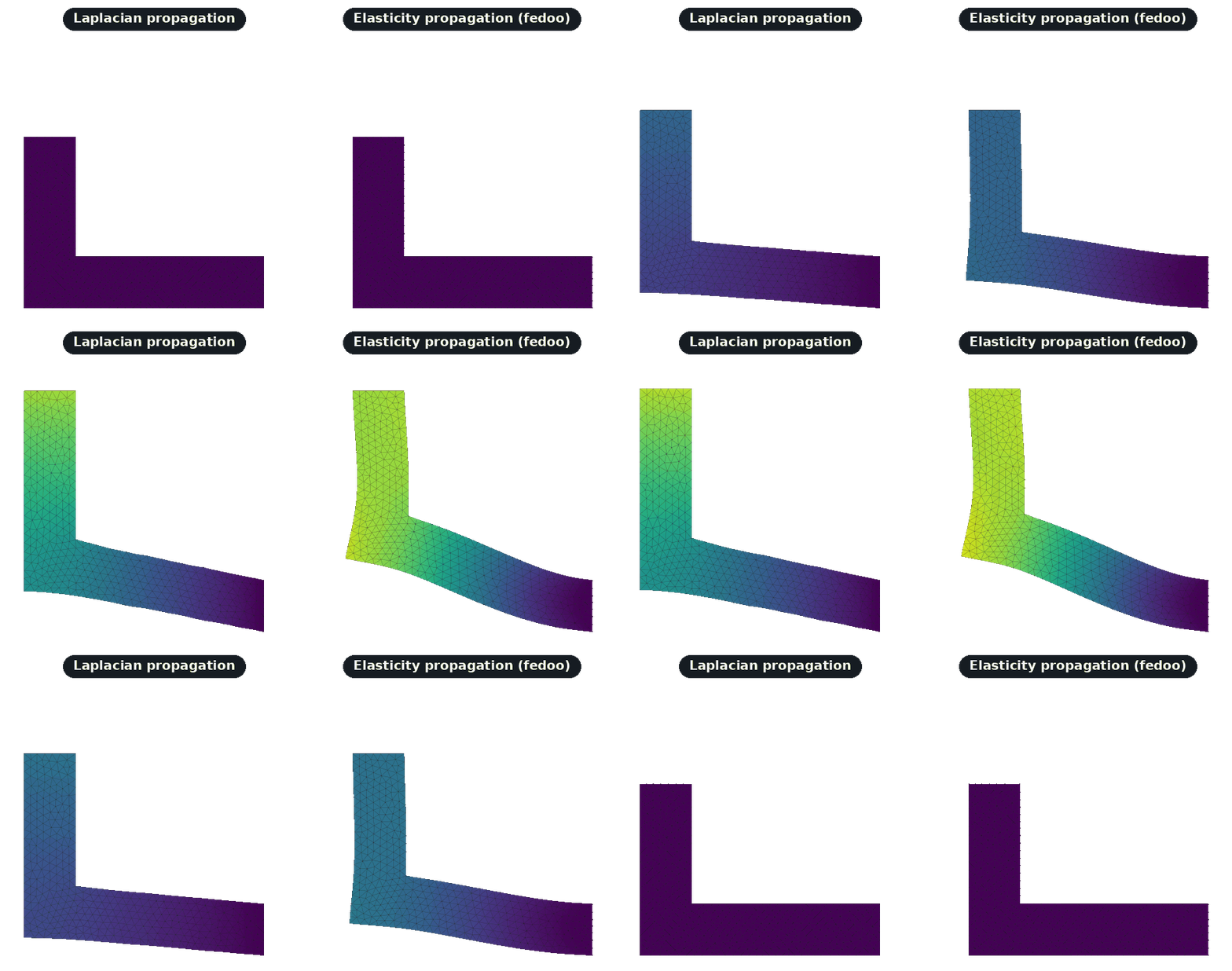
The two methods give noticeably different fields whenever the geometry involves bending, re-entrant corners, or large boundary displacements. The elasticity-based propagator captures the bending kinematics and concentrates strain at re-entrant corners; the Laplacian one only knows about graph distances.
When to use the elasticity-based path
| Scenario | Recommended |
|---|---|
| Small displacements, smooth geometry | Laplacian (cheap, no dependency) |
| Cantilevers, brackets, levers | Elasticity (captures bending) |
| Sharp re-entrant corners under load | Elasticity (correct stress concentration) |
| Large deformations near element inversion | Elasticity (resists inversion better) |
2D demo: L-bracket cantilever
The free tip of the foot is pinned and the top of the post is pulled upward. The Laplacian field linearly interpolates the prescribed values along graph distances, so the bracket pivots like a rigid body. Linear elasticity captures the bending: the post curves backward at the re-entrant corner and the foot bows visibly.
from mmgpy.lagrangian import (
    propagate_displacement,
    propagate_displacement_elasticity,
)

# vertices: (N, 2), elements: (M, 3), boundary_mask: (N,) bool
# boundary_displacement: (N, 2), zero on interior, prescribed on boundary

field_lap = propagate_displacement(
    vertices, elements, boundary_mask, boundary_displacement,
)
field_ela = propagate_displacement_elasticity(
    vertices, elements, boundary_mask, boundary_displacement,
    E=1e6, nu=0.3,
)
Full script:
examples/mmg2d/elasticity_propagation.py.
3D demo: extruded L-bracket
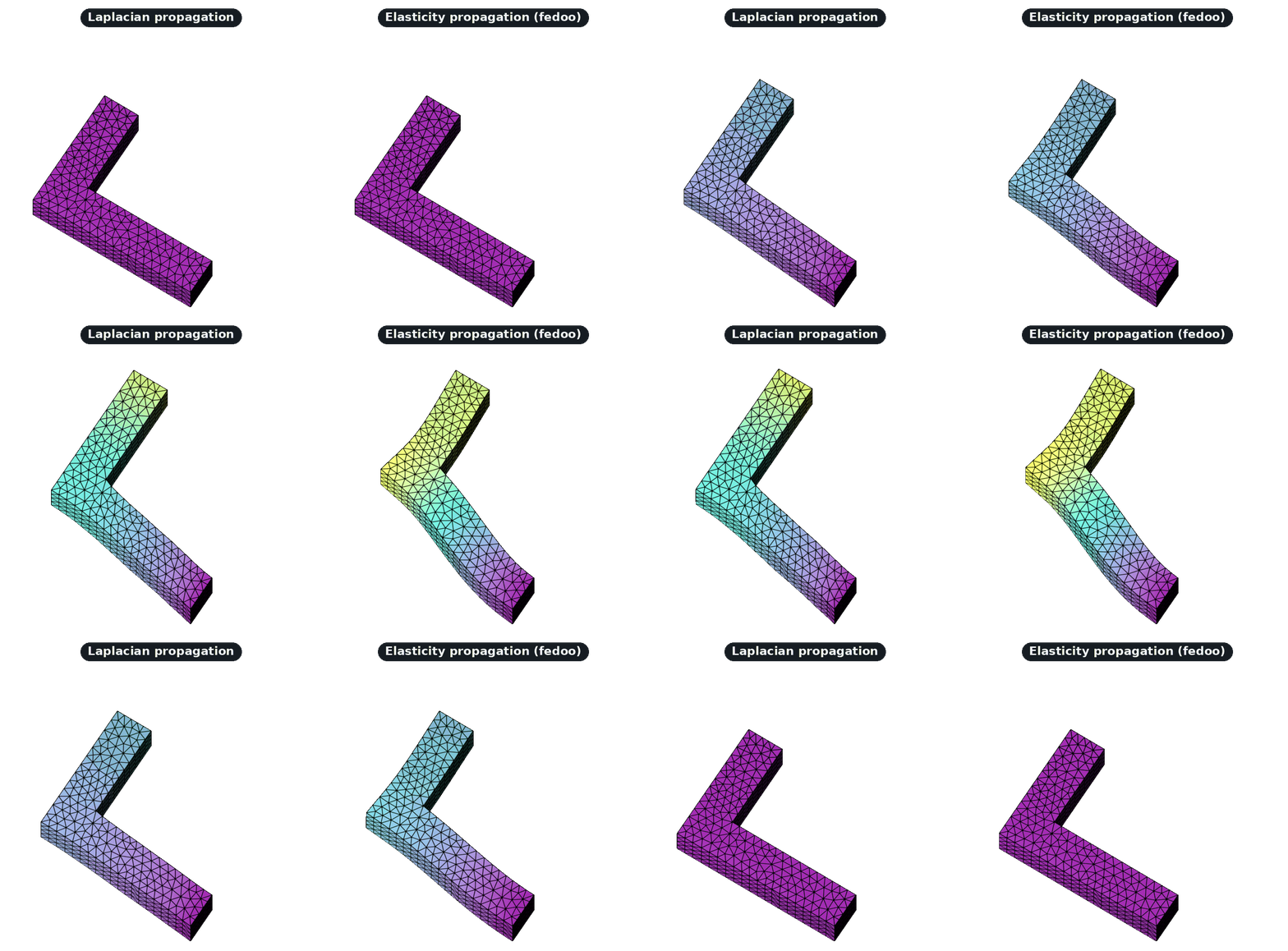
Same geometry extruded in z. The pure Laplacian solver moves only the prescribed face and produces a rigid pivot. Elasticity propagates the loading through the corner, bending the entire bracket.
Full script:
examples/mmg3d/elasticity_propagation.py.
PyVista accessor
The accessor's move() method exposes the propagator via the
propagation_method keyword:
import numpy as np
import pyvista as pv
import mmgpy  # noqa: F401  -- registers the .mmg accessor

mesh = pv.read("bracket.mesh")
displacement = np.zeros((mesh.n_points, 3))
# ...prescribe values on the boundary indices you care about...

# Default Laplacian
moved_lap = mesh.mmg.move(displacement, propagate=True)

# Elasticity-based propagation (requires fedoo)
moved_ela = mesh.mmg.move(
    displacement,
    propagate=True,
    propagation_method="elasticity",
)
Installing the fedoo extra
fedoo is an optional dependency; mmgpy still imports cleanly without it
and the Laplacian path keeps working. Only propagate_displacement_elasticity
and propagation_method="elasticity" need it.
conda-forge users
fedoo is published on PyPI but not on conda-forge, so the [fem] extra
isn't reachable via conda install mmgpy. Install fedoo separately into
the same environment:
conda install -c conda-forge mmgpy
pip install fedoo                # PyPI (recommended)
# or:
conda install -c set3MAH fedoo   # the upstream maintainers' personal channel
See also
- API reference: Lagrangian Motion for the full function signatures and accessor options.
- Hessian-Based Adaptation — the natural follow-up: after deforming a mesh you may want to refine where a solution field has high curvature.